
Free For All: Freedom, Justice, and Citizenship


Overview
How do we make a just society? Do human rights help bring about social change? Should governments insist that other governments respect human rights? Is our obligation to local poverty different than it is global poverty? What does ethical civic engagement look like, within the university and outside of it? How free should our speech be, and do our moral obligations always restrict our freedom? What is the role of the university—and your role within the university—in helping to improve the world?
The Freedom, Justice, and Citizenship Focus Program grapples with the moral, legal, and practical questions individuals and governments confront when trying to improve our world, all issues for study and discussion of the Kenan Institute for Ethics, the home of this FOCUS cluster. Drawing upon insights from history, political science, philosophy, and law, we explore together what it means to be a global citizen and ethical leader in the twenty-first century, and what rights and obligations come with global citizenship. Bringing together theory, contemporary case studies from around the world, and applied learning opportunities, this cluster cultivates the tools of moral dialogue necessary for lifelong citizenship.
We seek to build a community of students engaged in ethical inquiry, asking questions about their role in local, national, and international communities. You will have access to additional civic engagement and research opportunities offered through the Kenan Institute for Ethics. Focus students are welcomed into the Institute’s community of engaged student leaders, with additional academic and experiential opportunities, including DukeEngage, the Kenan Summer Fellows Program, Pursuing Purpose, and Team Kenan. In addition, a weekend field trip allows us to get to know one another better while exploring how ethics play out in real-world settings. Past field trips have typically been to visit Duke in DC and hear from Duke alumni doing work around the issues we will study.
Courses
Ethics 129FS/Political Science 176FS/International Comparative Studies 128FS/Public Policy 181FS — Human Rights & World Politics (IJ)

Juliette Duara, Senior Fellow at the Kenan Institute for Ethics
This course examines the role of human rights and global justice in world politics. It seeks to understand how and why the human rights regime was created, how human rights standards and notions of global justice have evolved, and the role of advocacy organizations in promoting human rights at both the domestic and international levels. We will consider questions such as whether human right are universal, what role human rights and global justice should be play in U.S. foreign policy, which strategies are most effective in promoting human rights and global justice, and which risk inciting backlash. The course will cover topics including civil and political rights; economic, social and cultural rights; genocide, torture, business and human rights, conflict diamonds and university investment, humanitarian intervention, and the international criminal court. It will use a range of materials, including scholarly books and articles, case studies, NGO reports and films.
Ethics 190FS-02/Public Policy 190FS/Political Science 190FS/ Education 190FS - Civic Engagement and American Higher Education (IJ)

Eric Mlyn, Distinguished Faculty Fellow in the Kenan Institute for Ethics; Lecturer in the Sanford School of Public Policy
This course explores the history of the public mission of American institutions of higher education and the contemporary manifestations of this mission. We will examine the resurgence of the civic engagement movement in American colleges and universities in the 1980s and the impact of the wide range of curricular and co-curricular programs that have emerged in the last decades. Students will review key academic reports and consider recommendations for changes to what we are doing and how we do it and will gain a deep familiarity with the variety of civic programs at Duke. Together we will ask: "what role should civic engagement play in American higher education?"
Ethics 190FS/ Public Policy 190FS/ Sociology 190FS - Just Work: Restorative Justice Models and Applications (IJ)

Ada Gregory, Associate Director, Kenan Institute for Ethics
Restorative Justice (RJ) has emerged as a “new” means of reforming the modern justice system. This course explores the aims of RJ to provide an alternative to typical retributive justice models in various contexts: the criminal justice/education systems, the environmental justice movement, and in international human rights work. Beginning with an overview of theory and practice, the course will critically consider RJ’s strengths and limitations to address harms within and beyond State boundaries and those affecting past and future generations or entities other than humans (animals, plants, rivers, land). The course will ultimately ask whether RJ offers the kind of shift needed in our society to adequately address the current failings in our justice systems within our communities, our institutions, and our world.
Philosophy 124FS — Freedom and Moral Obligation (IJ)
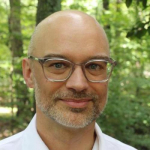
Jesse Summers, Director of University Initiatives, The Purpose Project,
Senior Fellow, Kenan Institute for Ethics, Adjunct Associate Professor of Philosophy
Are moral obligations limitations on our freedom, or are they, as some philosophers have insisted, the fullest expression of freedom? To understand the disagreement, we’ll look at moral obligations, particularly social and political obligations. How do collective moral obligations, like climate change or reparations for slavery, obligate us individually—or do they? Is freedom of speech morally required? Finally, we will consider Kant’s Groundwork of the Metaphysics of Morals, in which Kant argued that we are only free when our actions are dictated entirely by morality.